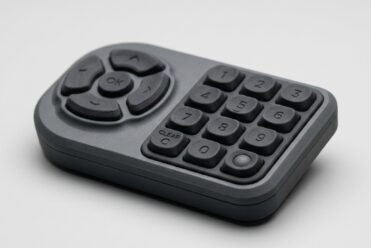



Custom Electronic Enclosures and Covers (IoT, Industry)
Designing your custom electronic enclosure: agile housings
An off-the-shelf enclosure almost never matches your PCB, and a steel mold is far too expensive for a few hundred parts. 3D printing (SLS/MJF) and small batch injection molding let you design your custom electronic enclosure around the electronics, rather than the other way round.
The result: a custom enclosure made straight from your 3D file, with no mold cost, in 4 to 6 working days in SLS (slightly longer in MJF).
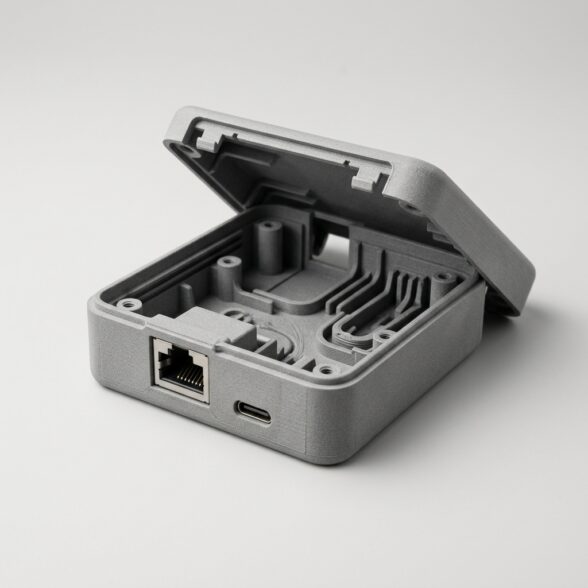
- Connector cut-outs (USB, RJ45), light guide seats and battery mounts are built directly into the 3D file.
- Clips, living hinges (to be confirmed depending on the material) and screw bosses are printed in a single operation. Self-tapping brass inserts are available for frequently assembled parts, with stainless Helicoil inserts as a last resort.
- Post-processing options: painting, laser marking of serial numbers or branding.
- Recommended technologies: MultiJet Fusion MJF or selective laser sintering SLS.
Materials for custom electronic enclosures (fire and IP standards)
The choice of material depends mainly on three constraints: fire behaviour (flame-retardant materials), the required protection level (IP rating to be validated on the assembled unit) and the operating environment (indoor, outdoor, medical). The table below summarises the materials available for your custom electronic enclosure according to these criteria.
| Constraint | Recommended material | Why? |
|---|---|---|
| Standard (indoor) | PA2200 (PA12), white or black | Economical, good mechanical strength, dimensional accuracy. The most widely used SLS material. |
| Fire / smoke (transport) | PA2241FR | Rated UL94-V0 (self-extinguishing) for aerospace and rail applications. |
| Chemical resistance (outdoor) | PP (polypropylene) | Excellent chemical resistance and low moisture absorption (fluid tanks). |
| Transparency | SLA ClearVue resin | For display windows or light guides. |
Common applications
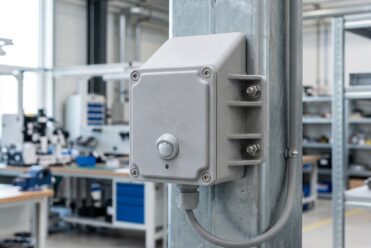
Connected sensors (IoT)
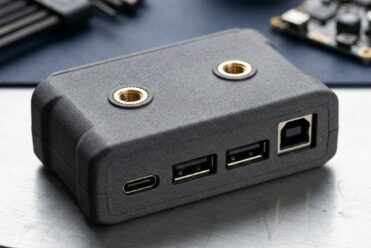
Special-purpose machines
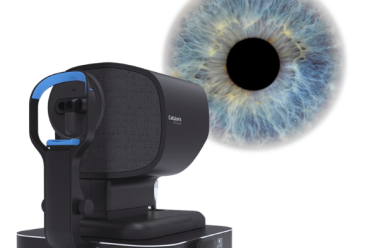
Medical devices
Frequently asked questions
Laser sintering is porous by nature. An impregnation varnish and O-ring grooves improve sealing; the IP rating is validated on the assembled unit.
Yes. For occasional disassembly, self-tapping plastic screws work very well in PA2200. For frequent assembly we recommend self-tapping brass inserts fitted in our workshop (stainless Helicoil as a last resort), or a thread tapped directly into the material.
We recommend a wall thickness of 1.5 mm to 2 mm to keep the enclosure rigid. Clips can be thinner (0.8 mm) to stay flexible.
It depends on the material and the finish. An unfinished SLS enclosure usually ships within 4 to 6 working days. Allow 2 to 3 days more for painting or dyeing. For a firm lead time on your order, get in touch.
Let’s discuss your project
Related applications
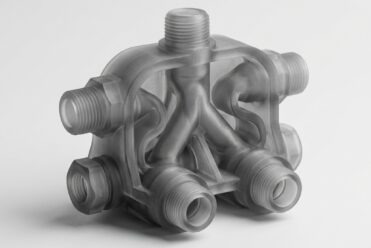
Connectors, manifolds and fluid systems
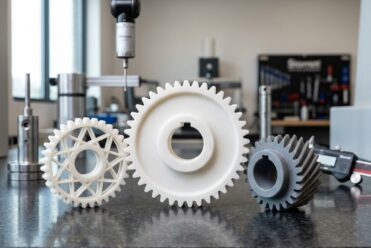
Gears and transmission parts