


Industrial Models and Trade Show Prototypes
Explaining the invisible at a trade show
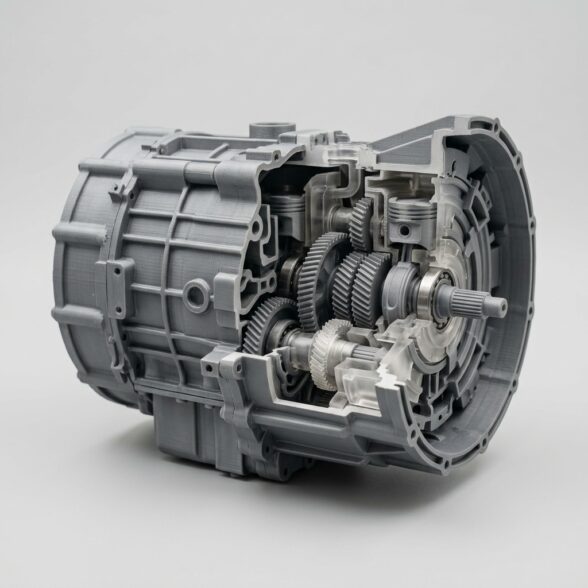
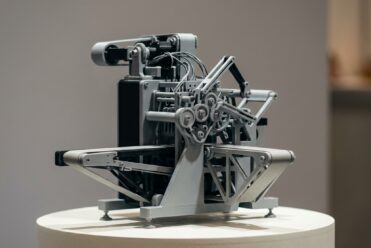
At a trade show such as Global Industrie, the Paris Air Show or CES, you have a few seconds to capture attention. A video is not enough. An industrial model shows what is hidden: the inside of an engine, the path of a fluid or the working of a mechanism, through cutaway or transparency techniques.
- A transport model faithfully reproduces trains, aircraft, satellites or military vehicles at reduced scale (1:10, 1:20).
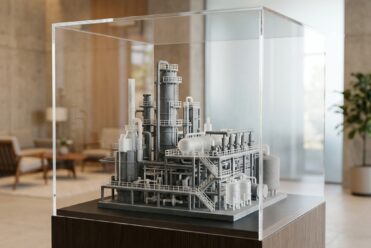
- A process model represents a complete production line to explain a logistics flow.
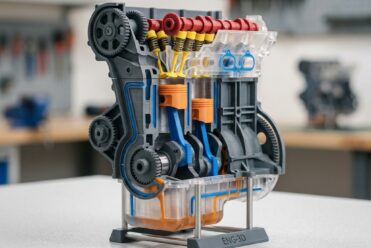
- A teaching model is cut in half or printed in transparent material to reveal the technology inside.
Techniques that teach
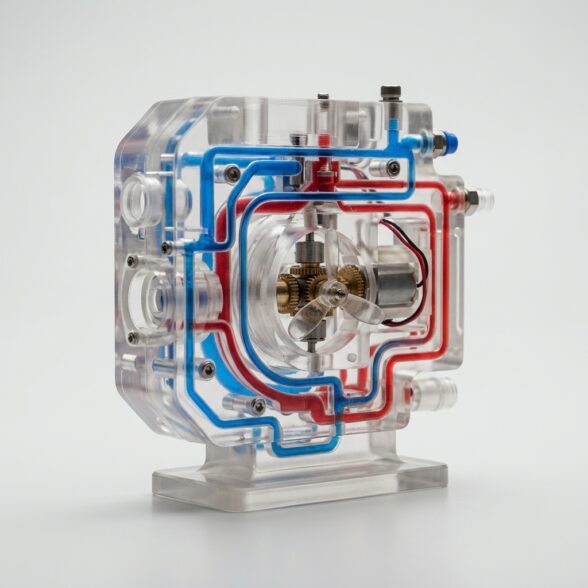
We combine materials to make the model speak for itself. Transparency (SLA) reveals fluids or internal mechanisms, and a painted colour code identifies the circuits, blue for air and red for oil for instance.
Models that can be handled
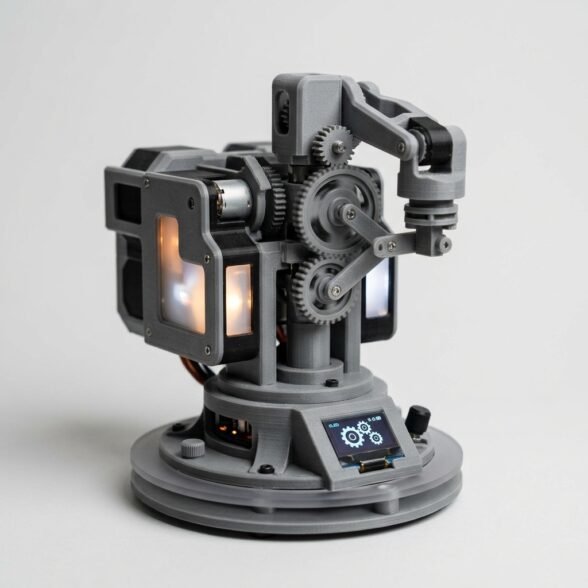
A trade show model holds attention far better when it can be handled and explained. We print the visible parts, cutaways and mechanisms to scale, demountable and ready for your team or your set designer to integrate should you wish to add motorization, lighting or screens.
Scales, files and transport
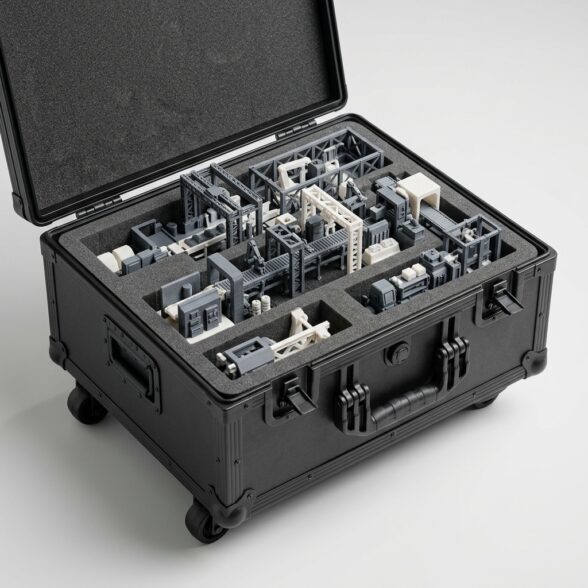
An industrial model is usually built at 1:10 or 1:20 for a single piece of equipment, and at a smaller scale for a complete production line. We start from your CAD files (STEP, STL) or from a 3D plant model; our design office simplifies and scales the geometry before printing. For trade show tours, large parts are designed as modules that assemble on site and are delivered in suitable transport packaging.
Common applications
Trade shows and events
Training
Showroom
Frequently asked questions
The model is delivered in suitable transport packaging; for touring exhibitions, large parts are designed as modules that assemble on site.
With assembly, size is no longer limited by the build platform. For transport, we design modules that assemble on site.
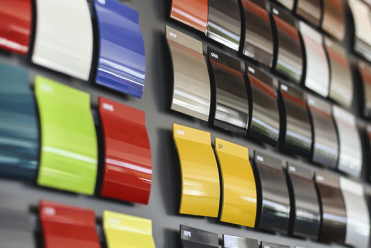
There is no direct colour printing: colour is achieved by DyeMansion dyeing (standard shades, RAL or Pantone on request) on SLS/MJF parts, or by painting. PolyJet also makes it possible to combine rigid and flexible materials in a single print.
A CAD file (STEP, STL, 3MF) or a 3D architectural or plant model is enough. If you only have 2D drawings or a physical part, our design office rebuilds the volume, using 3D scanning where needed, before scaling it.
Let’s discuss your project
Related applications
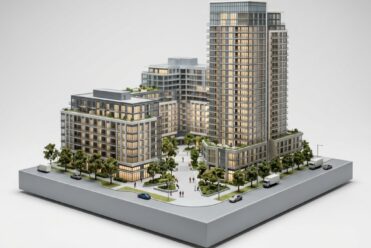
Architectural and urban planning models