


Sculptures, Artworks and Luxury Design
Digital art comes to life
For contemporary artists and luxury designers, 3D printing is a remarkable playground. It gives physical form to mathematical, organic or interwoven shapes that traditional casting struggles with. Initial acts as the maker behind your creations.
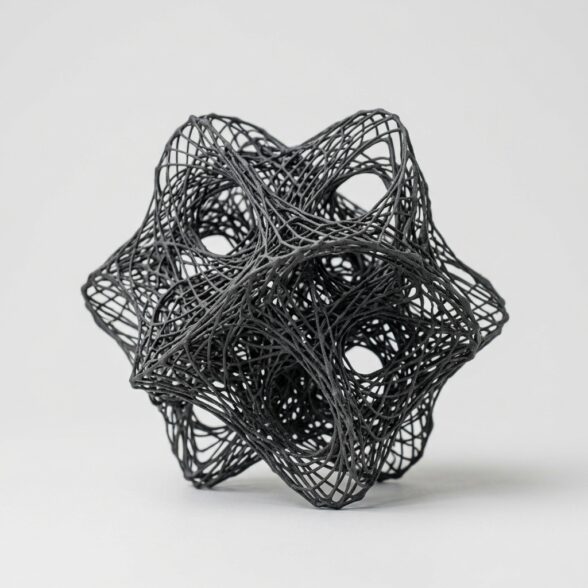
- Freedom of form is very wide: lace-like structures, objects within objects, pronounced overhangs.
- Upscaling means a 20 cm maquette can be scanned and printed two metres tall.
- Fidelity is very high: stereolithography (SLA) reproduces the finest details, skin grain or fabric texture, with layers of 75 to 150 microns.
Art finishes and trompe-l'oeil effects
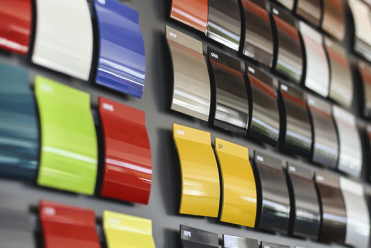
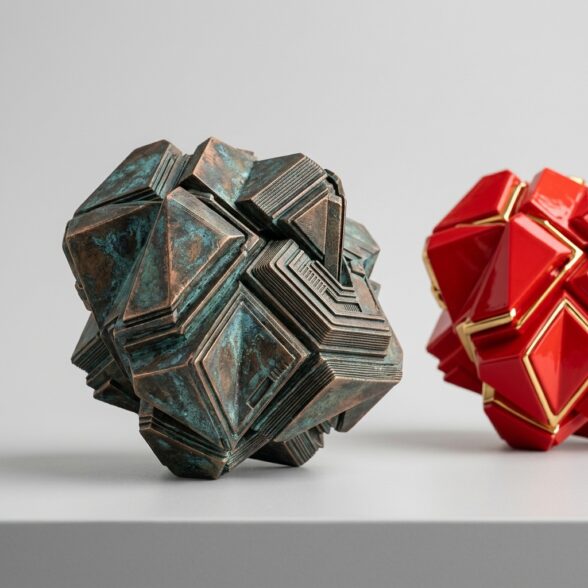
The object leaves the printer in resin or white powder. The magic happens in post-processing. Our finishing department turns plastic into a noble material. Metallization deposits copper or nickel (polished, brushed or black) by electroplating, for the look and the cold touch of metal. High-gloss lacquer delivers a car-body finish for pop art pieces. Material effects reproduce patinas in the manner of aged bronze, rust, stone or wood.
From file to artwork: formats and preparation
We print from the formats of digital creation as well as from scans. Sculpture files from ZBrush, Blender or Rhino export to STL or OBJ; an existing physical piece is digitized by 3D scanning for reproduction or enlargement. Our digital model makers close open volumes, check minimum thicknesses and hollow the piece to lighten it before printing, without altering the visible result.

Limited editions and patterns for art foundries
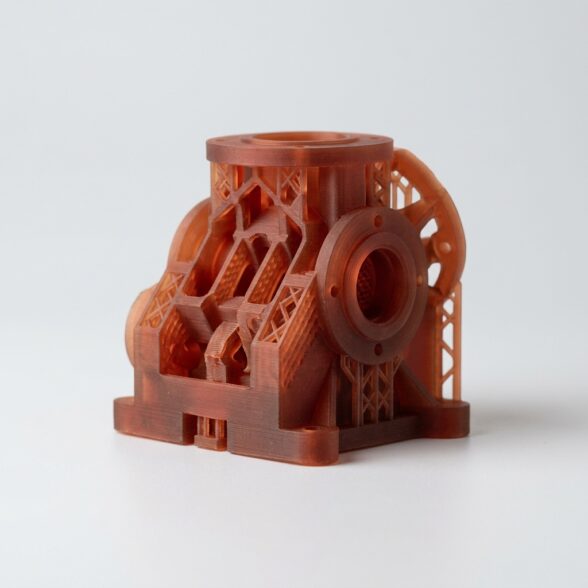
3D printing serves the art market in two ways. It produces numbered limited editions, each copy faithful to the digital original, which guarantees the consistency of a series and the value of the work. It also supplies the pattern for the foundry: a 3D printed model serves as the master for the casting mold (lost wax), for a traditional bronze pour without having to sculpt every copy by hand.
Common applications
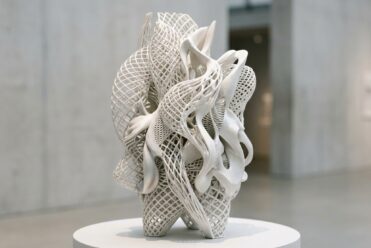
Contemporary art
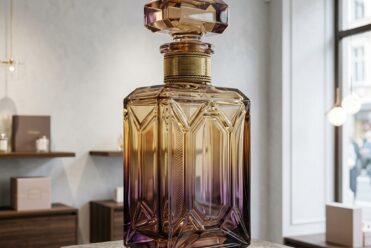
Luxury and merchandising

Heritage
Frequently asked questions
We split the 3D file into sections optimized for our large format machines. After printing, the blocks are assembled, bonded and sanded. The joints are nearly invisible once the finishing is done.
Under certain conditions. For outdoor use we apply specific UV-resistant primers and varnishes (automotive grade) to prevent the resin from yellowing. For durability measured in centuries, we recommend using a 3D printed model as the master for the casting mold (lost wax) of a classic bronze cast.
Far less than bronze or stone. The pieces are hollow (walls a few millimetres thick) and reinforced where needed, which makes transport and gallery installation considerably easier.
We digitize the original by 3D scanning, then rescale the file to the size you want before printing. A 20 cm maquette becomes a piece several metres tall, split into sections joined nearly invisibly where the size exceeds our build platforms.
Let’s discuss your project
Related applications
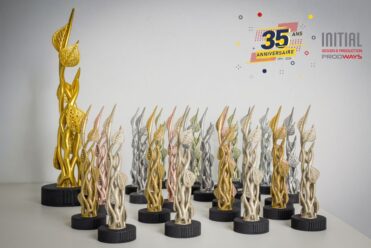
Custom trophies and medals
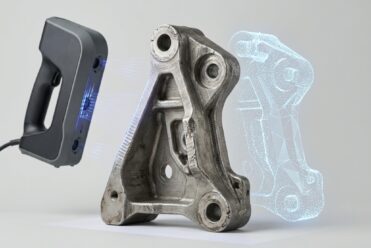
3D scanning and reverse engineering