



FFF 3D printing

Speed

Variety of materials

Cost-effective
Manufacturing process
How FFF 3D printing works
Fused filament fabrication (FFF) is a 3D printing process that builds the part layer by layer from a thermoplastic filament that is heated and then extruded.
The material is melted, deposited according to the required geometry, then solidified by cooling to form the final part.
Thanks to its excellent cost-to-volume ratio, FFF 3D printing is ideal for projects that call for speed, budget control and responsiveness.
What is the difference between FFF and FDM?
FFF and FDM rely on the same principle: a molten thermoplastic filament, deposited layer by layer. The difference lies in the machines and in the materials.
FFF 3D printing: temperature-controlled chamber (65 °C).
- Standard thermoplastics: ABS, PLA, PETG, PC
- Prototypes and tooling at a controlled cost
For high-performance materials, large build volumes and soluble supports, our teams will guide you towards our industrial FDM 3D printing.
Applications
- Functional prototypes
- Jigs, fixtures and workshop tooling
- Housings and enclosures
- Simple mechanical parts
- Ergonomic validation
- Teaching aids and mock-ups
Process characteristics
- Build volume: 340 x 320 x 340 mm
- Nozzle: 0.4 mm
- Layer height: 0.24 mm (can be customised on request)
- Standard infill: 20% or 100% (other rates on request)
- Recommended wall thickness: 1.2 mm
- Minimum tolerance: ± 0.2 mm
- Irregular surface finish (visible layer lines and seam area); finishing available: sanding, painting, varnishing, gluing, inserts
Our strengths
- Attentive professionals
- Technical expertise
- Proactive approach
- ISO 9001 – EN 9100 certifications
Our materials
- ABS
- PLA
- PETG
- PC
-
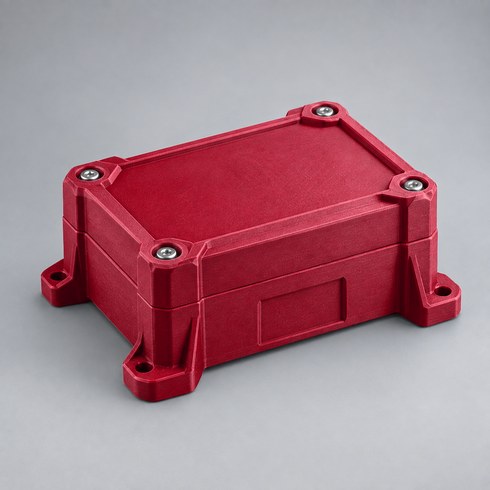
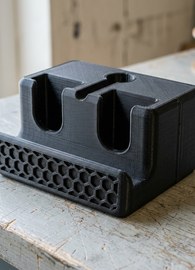
ABS
ABS is the reference thermoplastic of our FFF fleet for functional parts: good impact resistance, good durability and heat resistance up to 94 °C. Easy to sand, drill, glue and paint, and compatible with threaded inserts. Available in black, white and red, it suits enclosures, housings and workshop parts.
Download the data sheetProperties- Colours: black, white, red
- Other colours on request
- Heat resistance: 94 °C
- Post-processing: sanding, gluing, painting, inserts
Advantages- Good impact resistance
- Good durability
- Easy to machine, glue and paint
- Good threaded-insert integration
Limitations- Irregular surface finish (visible layer lines and seam area)
- Supports required depending on geometry
Accuracy- Layer height = 0.24 mm
- Recommended wall thickness = 1.2 mm
- Minimum tolerance = ± 0.2 mm
- Layer height can be customised on request
-
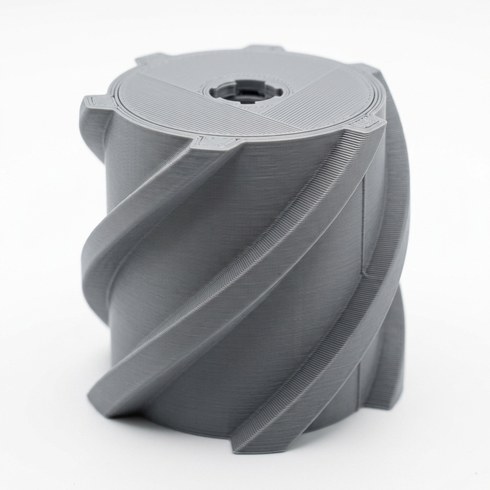
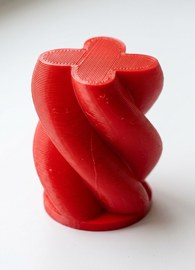
PLA
PLA is the material for prototypes, mock-ups and decorative parts: good-looking parts, good dimensional accuracy, ease of manufacture, fast and economical printing. It suits form validation, displays and teaching aids, for parts with low thermal loads (57 °C).
Download the data sheetProperties- Colours: black, grey, red
- Other colours on request
- Heat resistance: 57 °C
- Clean finish, sharp edges
Advantages- Good-looking parts
- Dimensional accuracy
- Ease of manufacture: fast and economical
- Good stiffness
Limitations- Moderate impact resistance
- Irregular surface finish (visible layer lines and seam area)
Accuracy- Layer height = 0.24 mm
- Recommended wall thickness = 1.2 mm
- Minimum tolerance = ± 0.2 mm
- Layer height can be customised on request
-
PETG
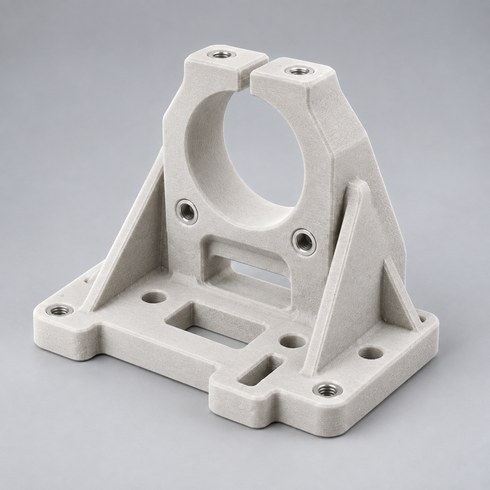
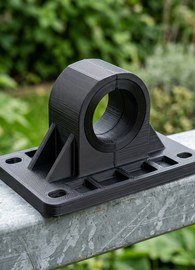
PETG is the all-round material of our FFF fleet for functional and structural parts, including outdoor use: it combines mechanical strength, toughness and good resistance to outdoor conditions, with heat resistance of 71 °C. It is the default choice for fixtures, jigs, brackets and everyday functional parts.
Download the data sheetProperties- Colours: black, white
- Other colours on request
- Heat resistance: 71 °C
- Semi-rigid
Advantages- All-round material: mechanical strength and toughness
- Good resistance to outdoor conditions
- Deforms without breaking
- Good resistance to moisture and common chemicals
Limitations- Irregular surface finish (visible layer lines and seam area)
- Supports required depending on geometry
Accuracy- Layer height = 0.24 mm
- Recommended wall thickness = 1.2 mm
- Minimum tolerance = ± 0.2 mm
- Layer height can be customised on request
-
PC
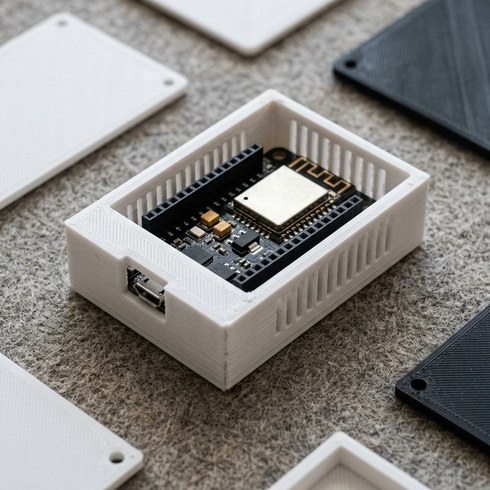
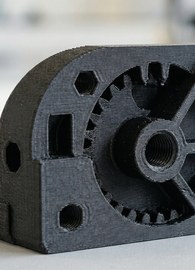
Polycarbonate (PC) is the high mechanical and thermal performance material of our FFF fleet: high mechanical strength, good impact resistance and good resistance to high temperatures (110 °C). It is intended for durable, demanding parts: structural covers, technical housings and functional prototypes under load.
Download the data sheetProperties- Colours: black, white
- Other colours on request
- Heat resistance: 110 °C
Advantages- High mechanical strength
- Good impact resistance
- Tensile strength XY: 55 ± 4 MPa
- Flexural strength XY: 108 ± 4 MPa
Limitations- Irregular surface finish (visible layer lines and seam area)
- Supports required depending on geometry
Accuracy- Layer height = 0.24 mm
- Recommended wall thickness = 1.2 mm
- Minimum tolerance = ± 0.2 mm
- Layer height can be customised on request
Comparison of 3D technologies and plastics
Not sure which material is best suited to your FFF 3D printing project? Check our comparison table or contact our team.